Forrest Mims Mini-Notebooks
The complete Radio Shack Engineer's Mini-Notebook series. Hand-illustrated electronics education that taught a generation of engineers and hobbyists.
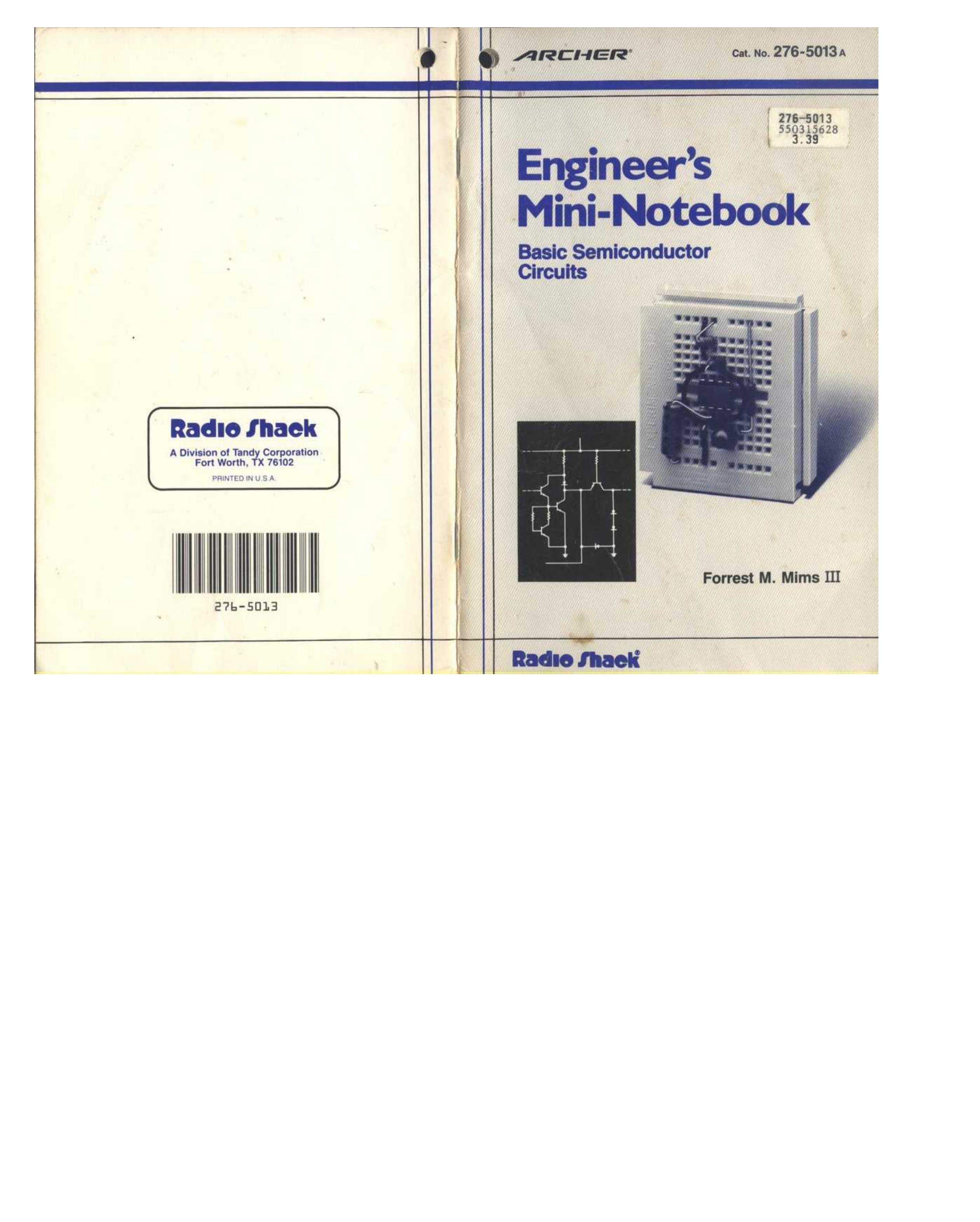
Basic Semiconductor Circuits
Fundamental transistor and diode circuits with Mims' signature hand-drawn illustrations. Covers NPN/PNP transistors, rectifiers, voltage regulators, and basic amplifier configurations.
Engineer's Notebook II
The foundational handbook covering integrated circuit applications. Features Mims' iconic hand-drawn schematics for op-amps, timers, audio circuits, power supplies, and dozens of practical IC projects.
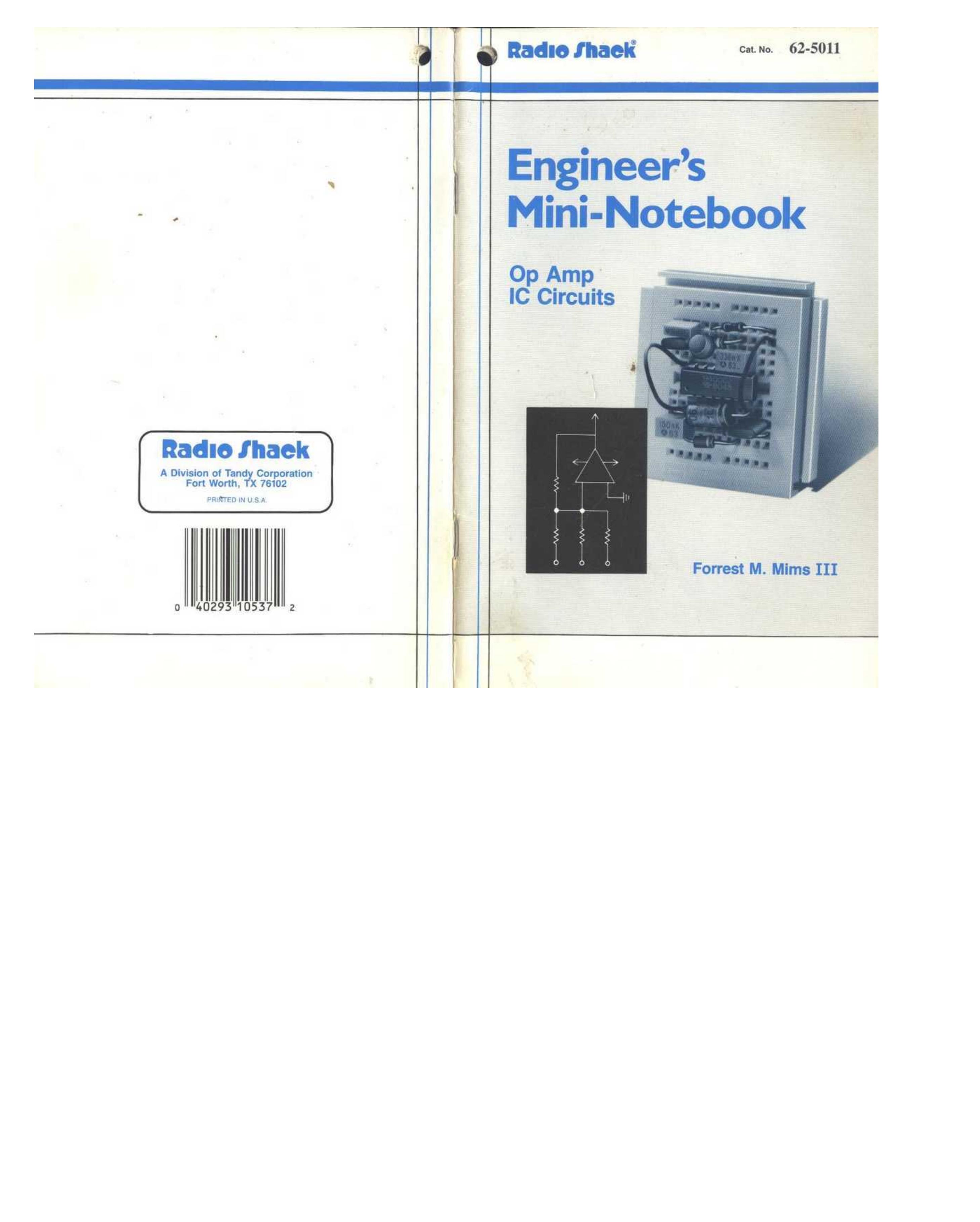
Op Amp IC Circuits
Comprehensive guide to operational amplifier circuits. Covers inverting/non-inverting amplifiers, comparators, integrators, differentiators, and practical applications.
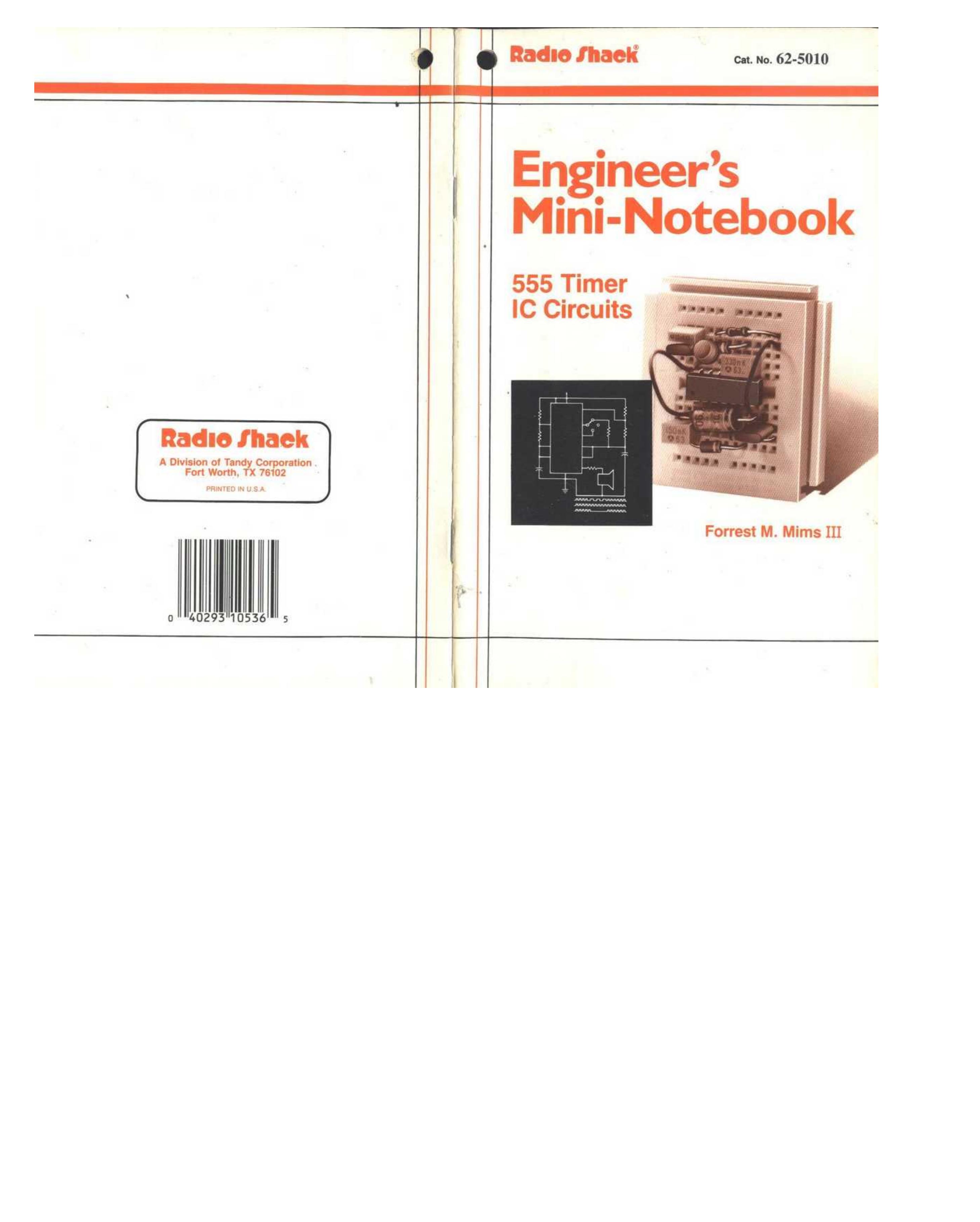
555 Timer Circuits
Everything about the legendary 555 timer IC. Monostable and astable modes, pulse generators, oscillators, and creative timing applications.
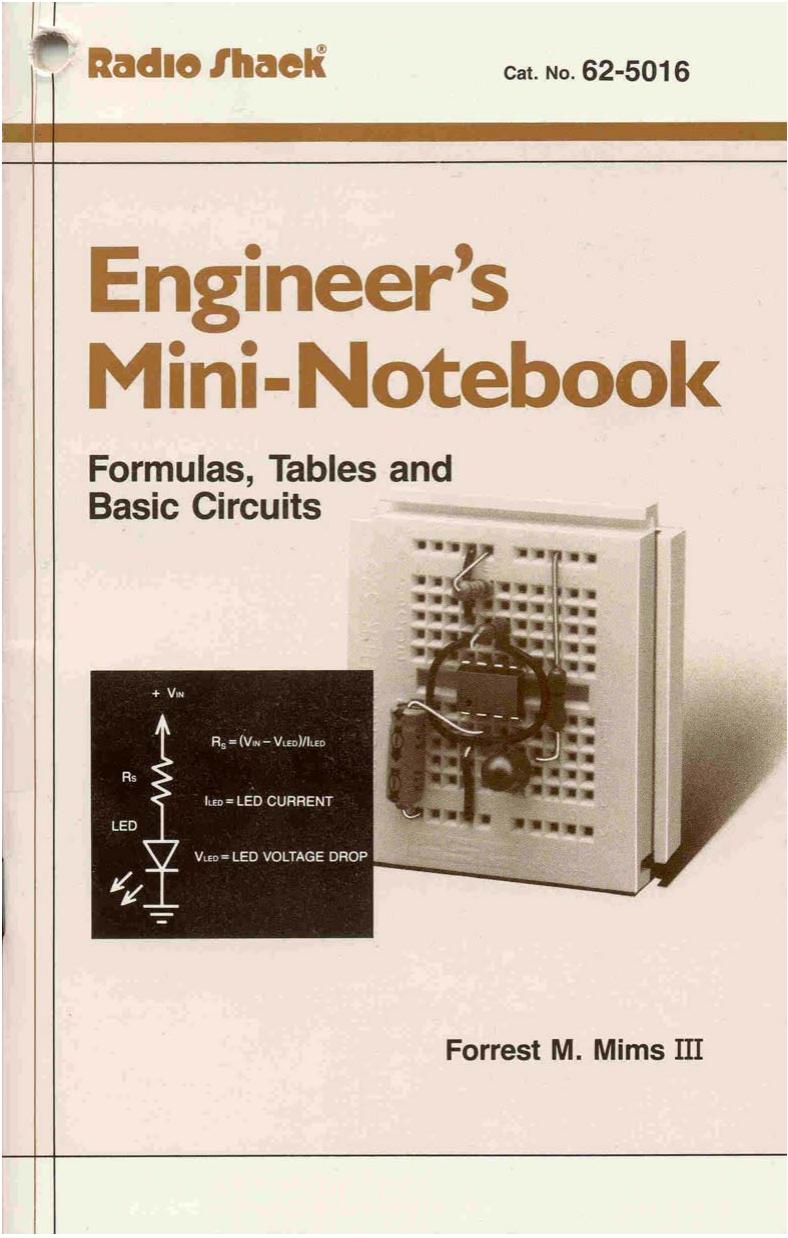
Formulas & Tables
Essential reference of electronics formulas, component values, schematic symbols, and fundamental circuits. The perfect pocket reference for any electronics workbench.
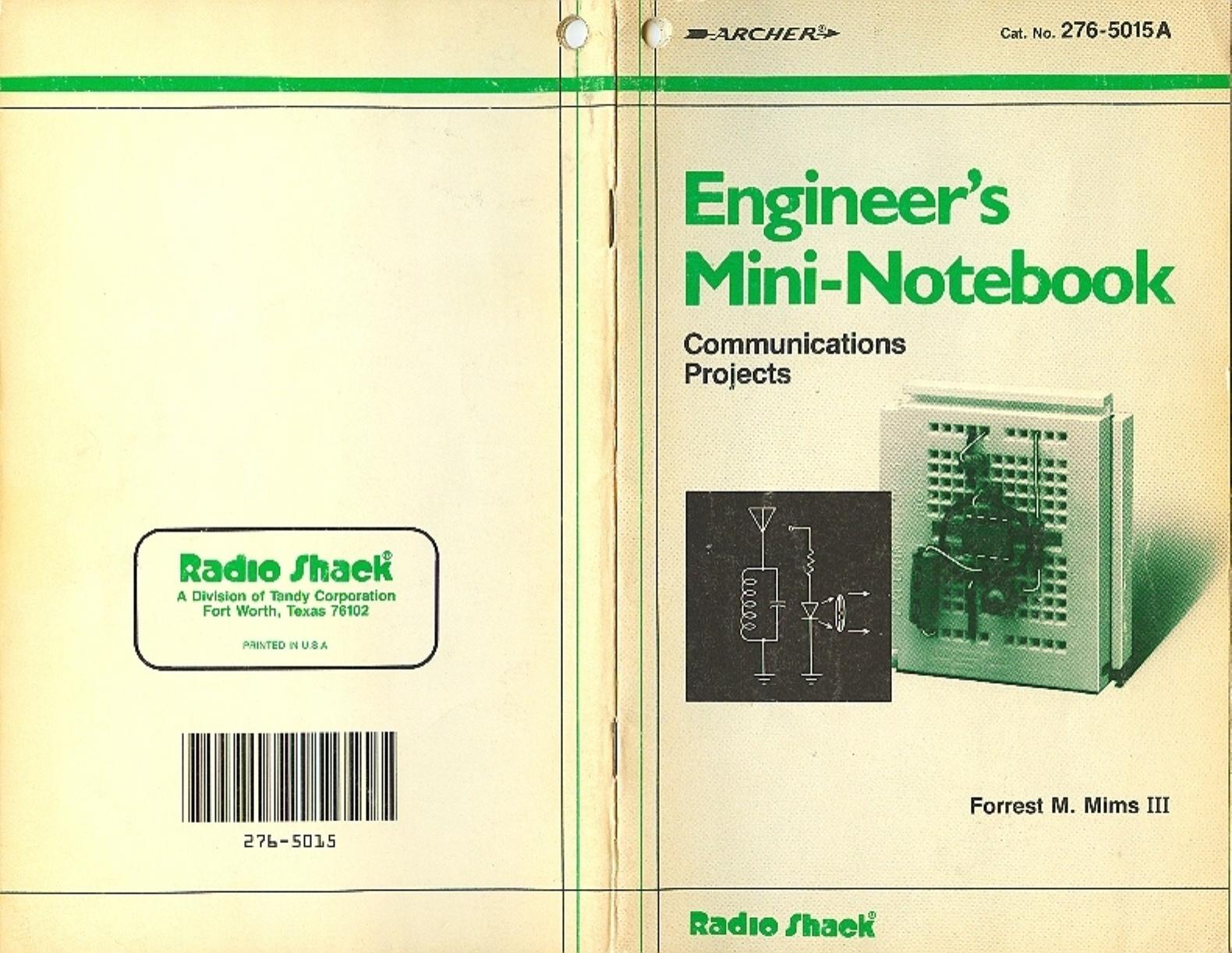
Communications Projects
Radio and communications circuits including transmitters, receivers, modulators, and antenna projects. Great for amateur radio enthusiasts and experimenters.
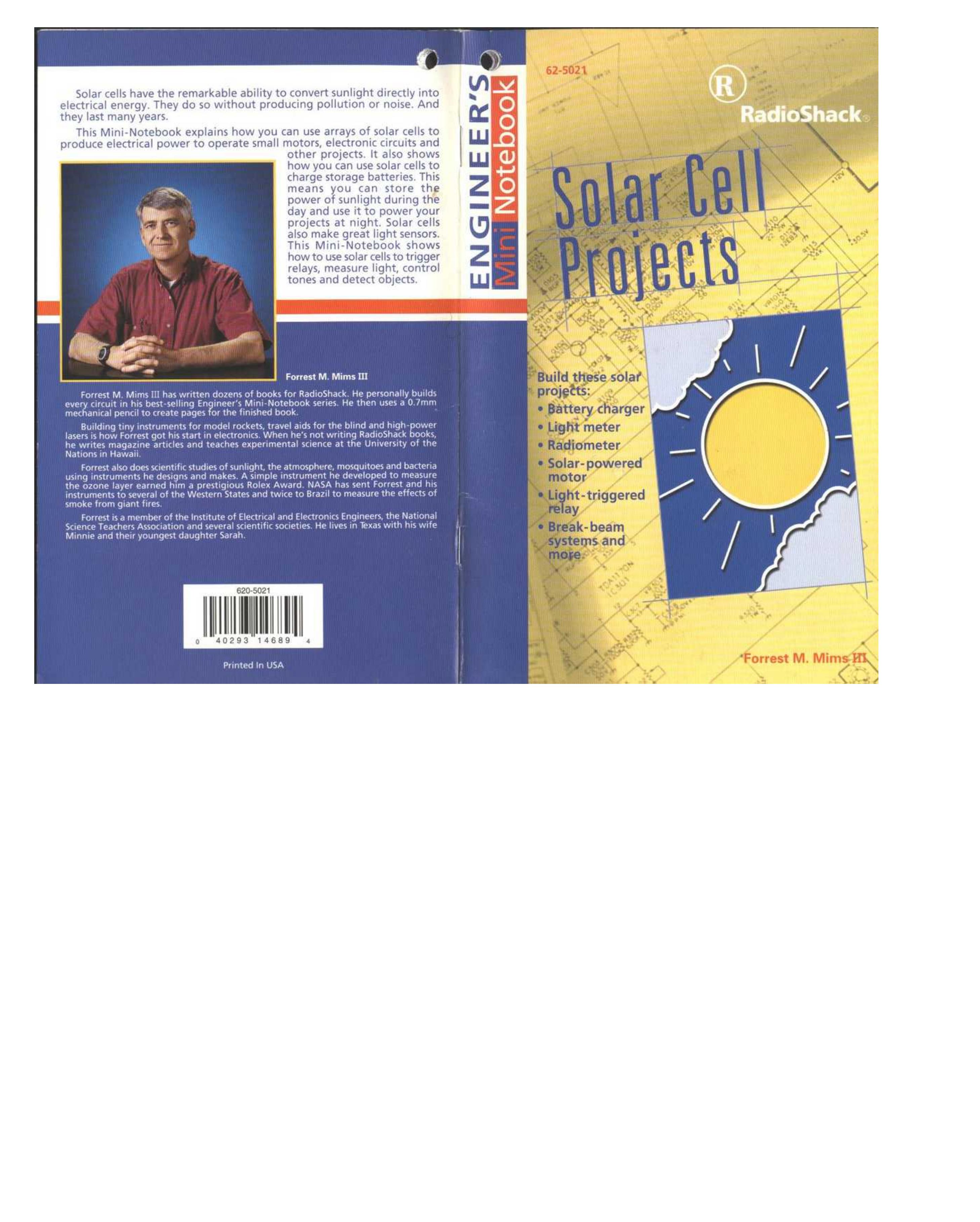
Solar Cell Projects
Harness the sun with photovoltaic circuits. Solar battery chargers, light meters, solar-powered gadgets, and energy harvesting projects.
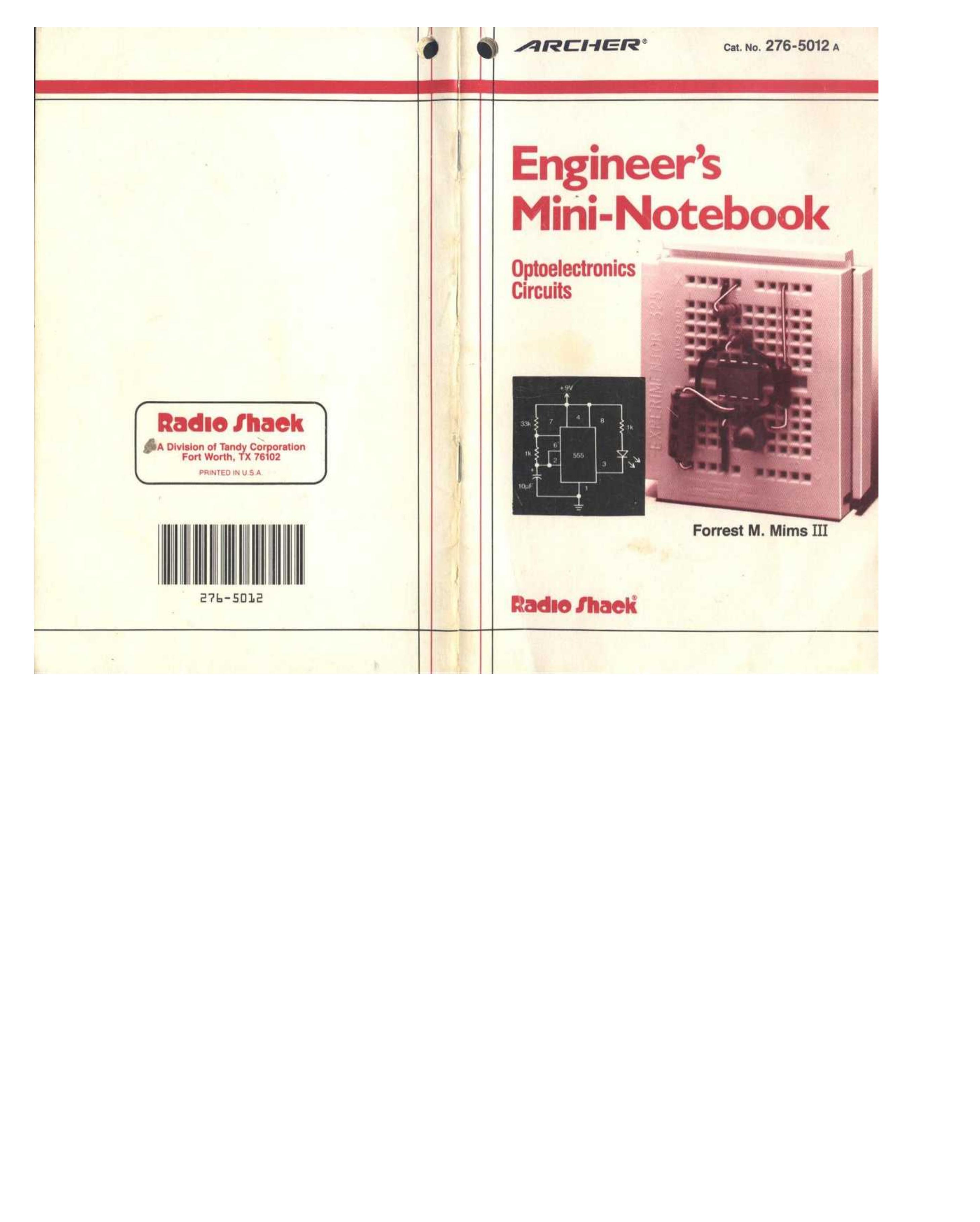
Optoelectronics Circuits
Light-based electronics including LEDs, phototransistors, optocouplers, fiber optics, and laser circuits. The intersection of light and electronics.
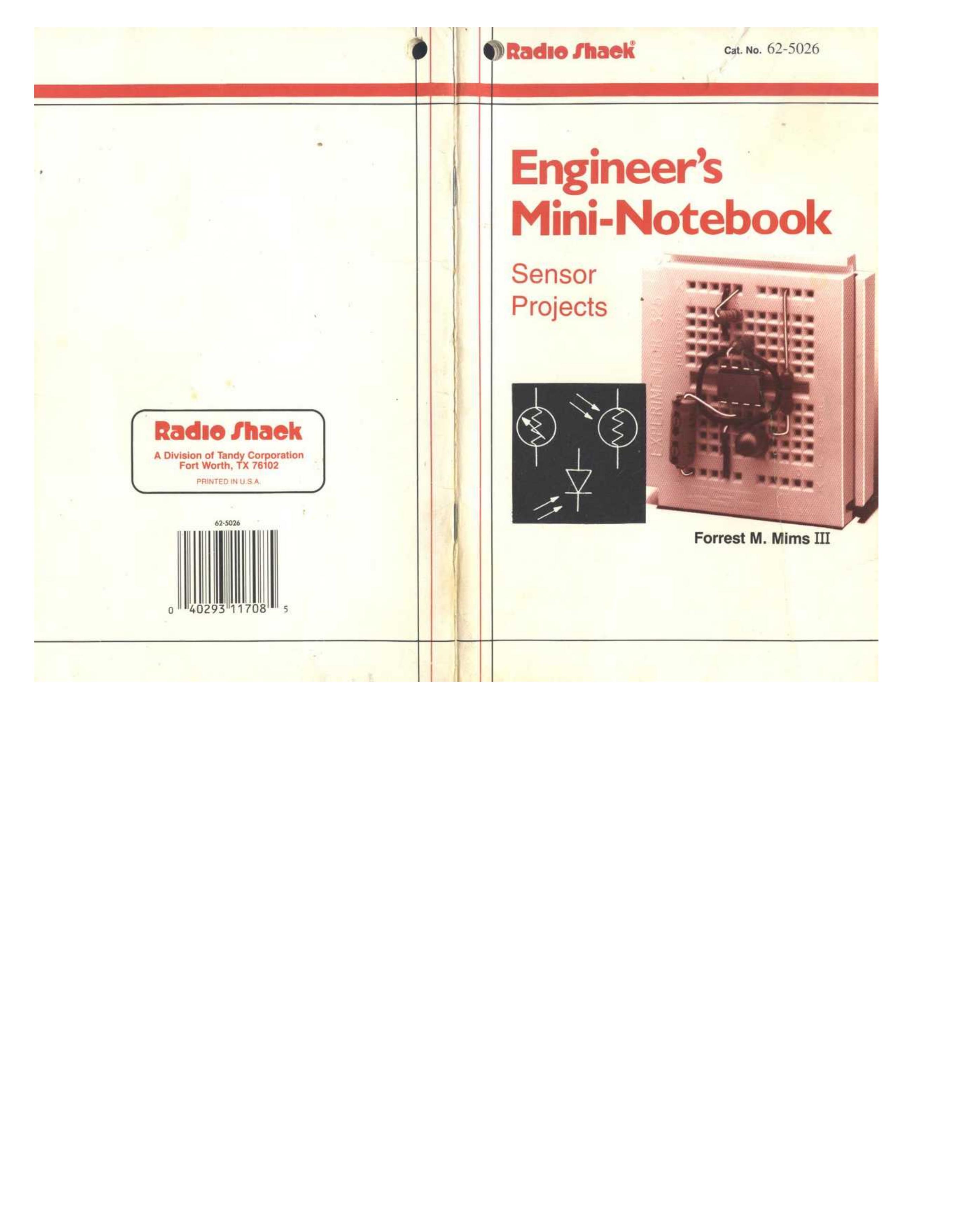
Sensor Projects
Interface with the physical world using sensors. Temperature, light, sound, touch, and motion sensors with practical circuits for each.
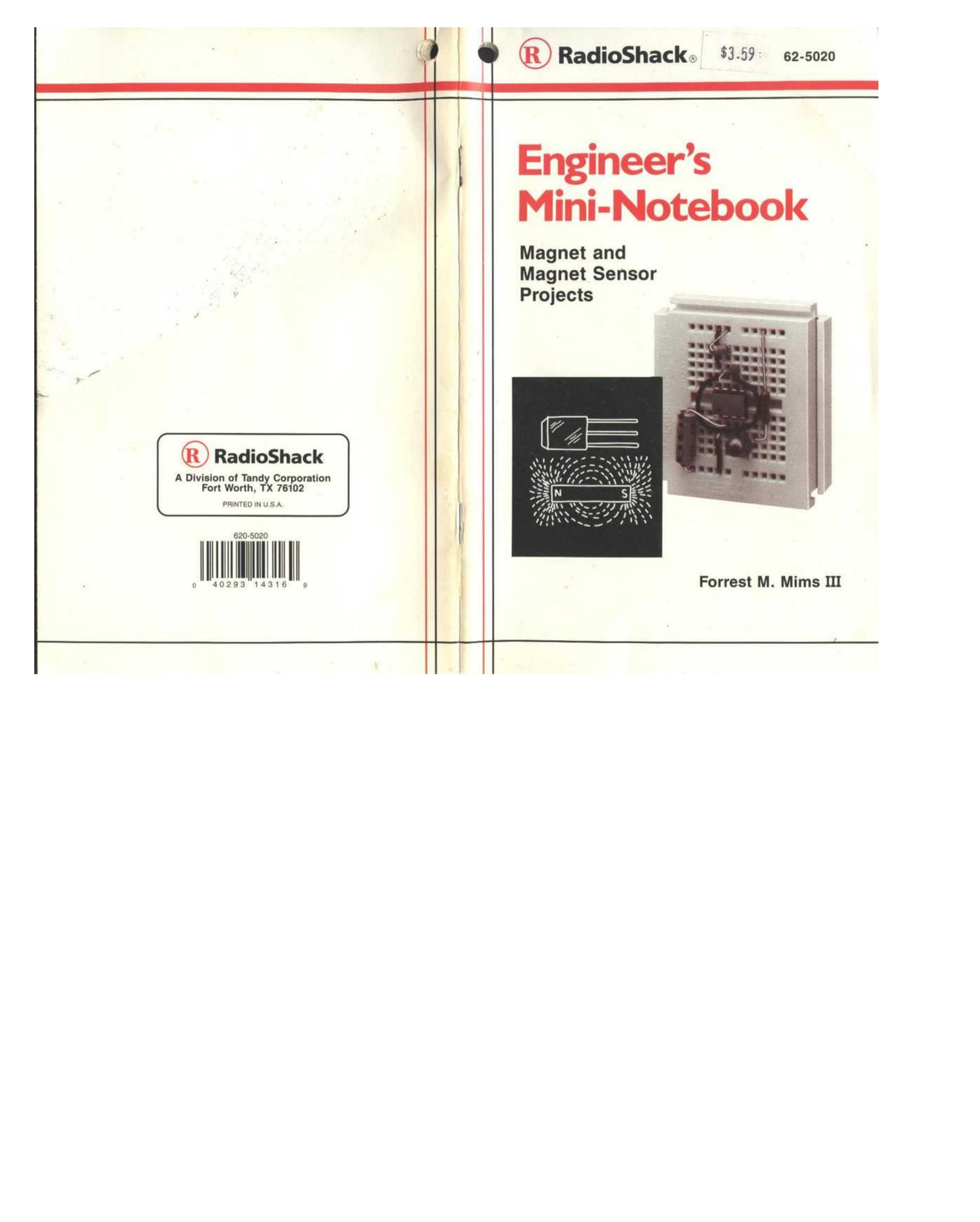
Magnet & Sensor Projects
Magnetic sensing and related projects. Hall effect sensors, reed switches, magnetic field detectors, and creative magnet-based circuits.
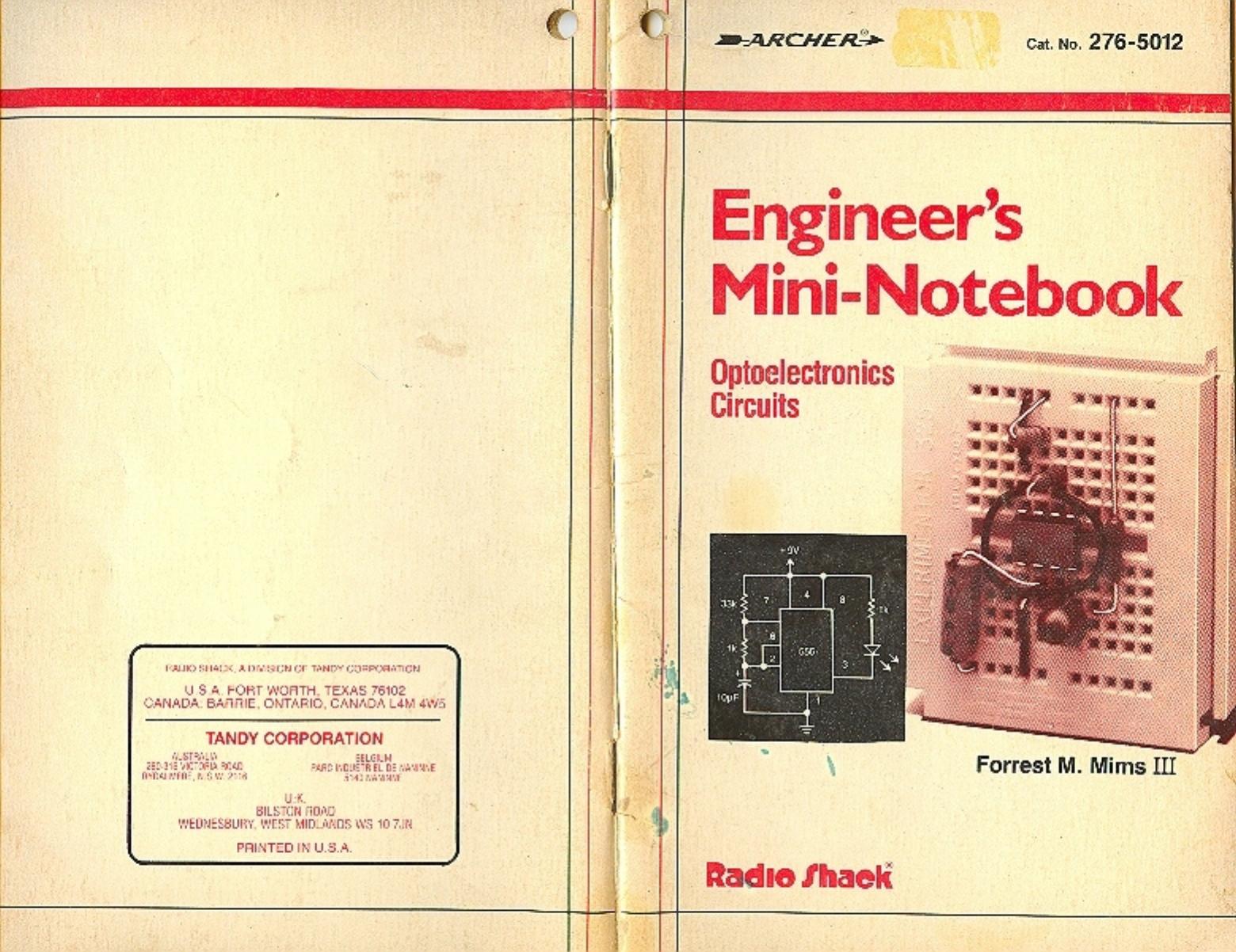
Optoelectronics (1986)
Earlier edition of the optoelectronics notebook with additional content and variations. A collector's edition with unique circuits.
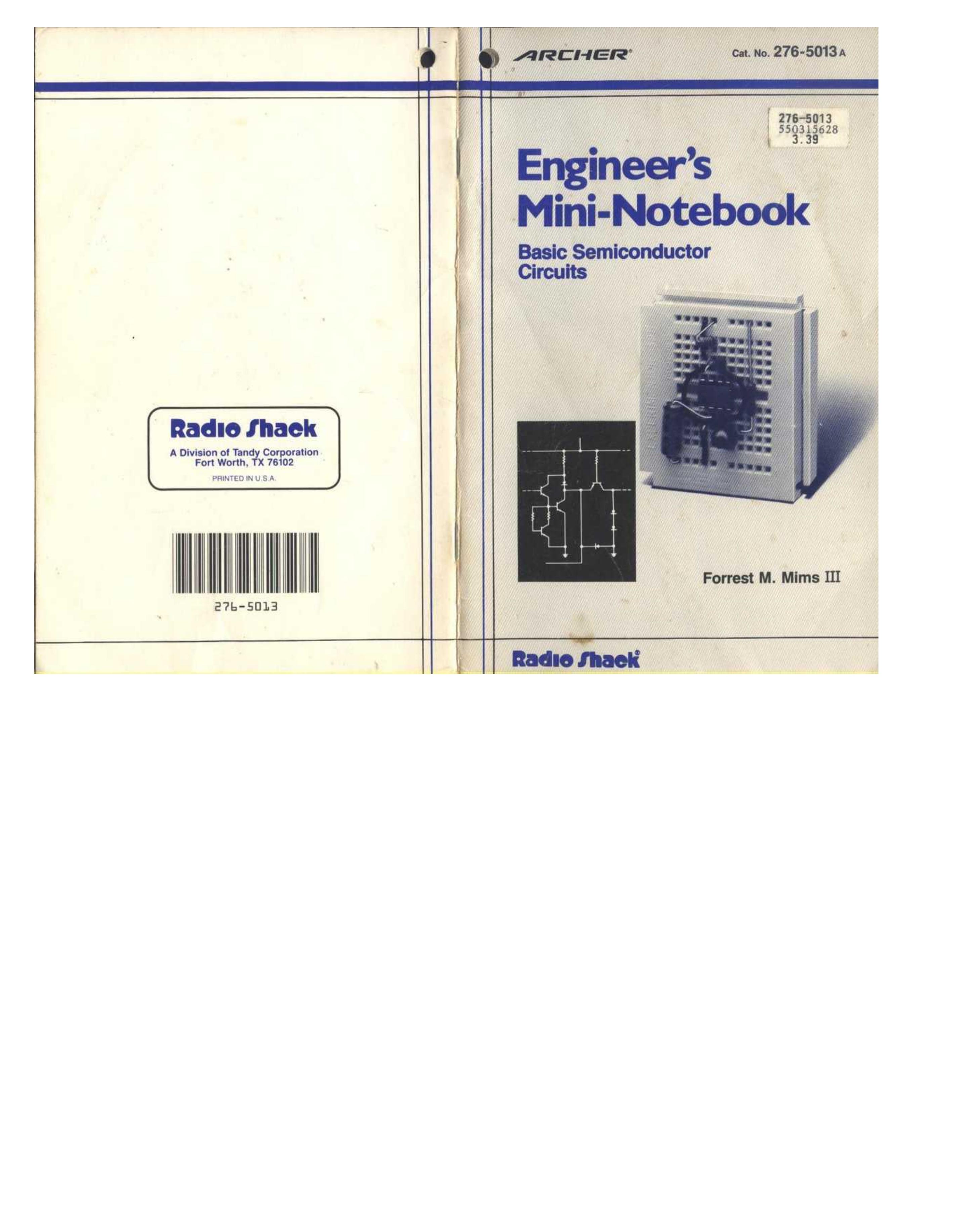
Semiconductors (1993)
Revised 1993 edition with updated component values and additional circuits. Reflects improvements in semiconductor technology over 7 years.
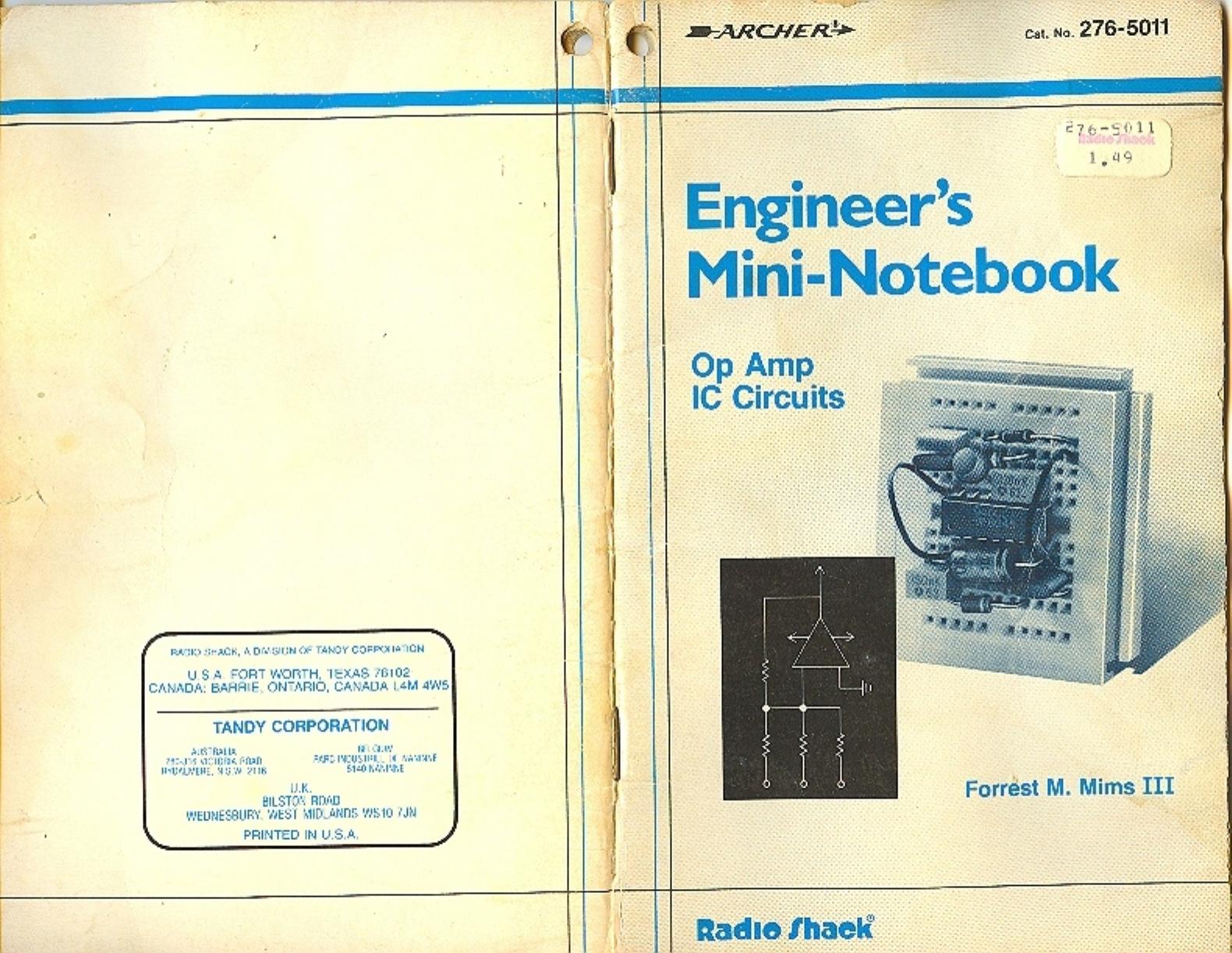
Op Amps (1985)
The original 1985 first printing of the Op Amp notebook. Features the earliest versions of Mims' iconic operational amplifier circuits.
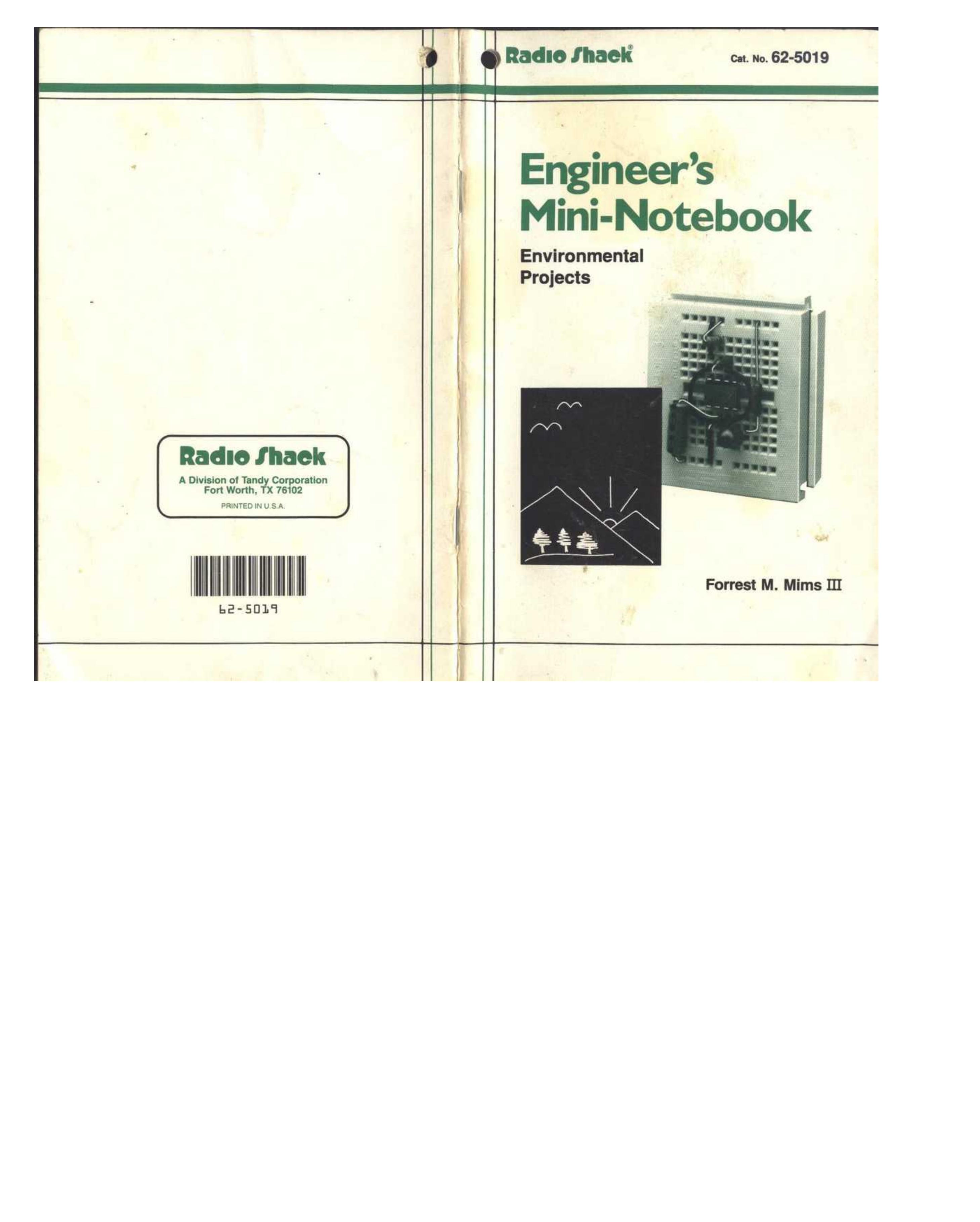
Environmental Projects
Electronics projects for environmental monitoring and measurement. Covers temperature sensors, humidity detectors, rain gauges, light meters, and other circuits for observing and measuring the natural world.
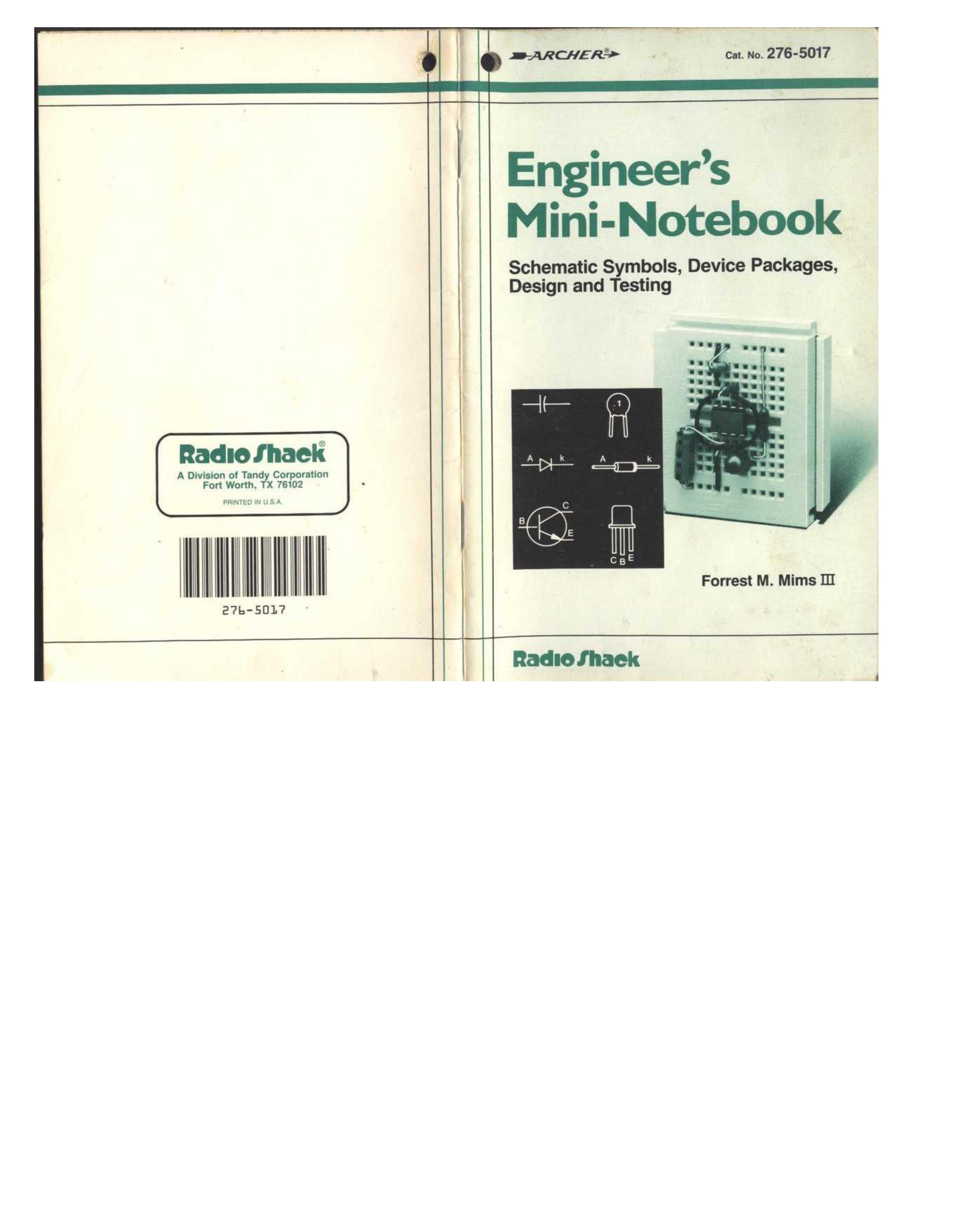
Schematic Symbols & Testing
Essential reference for reading and drawing electronic schematics. Covers standard schematic symbols, component package types, circuit design basics, and testing procedures with hand-drawn clarity.
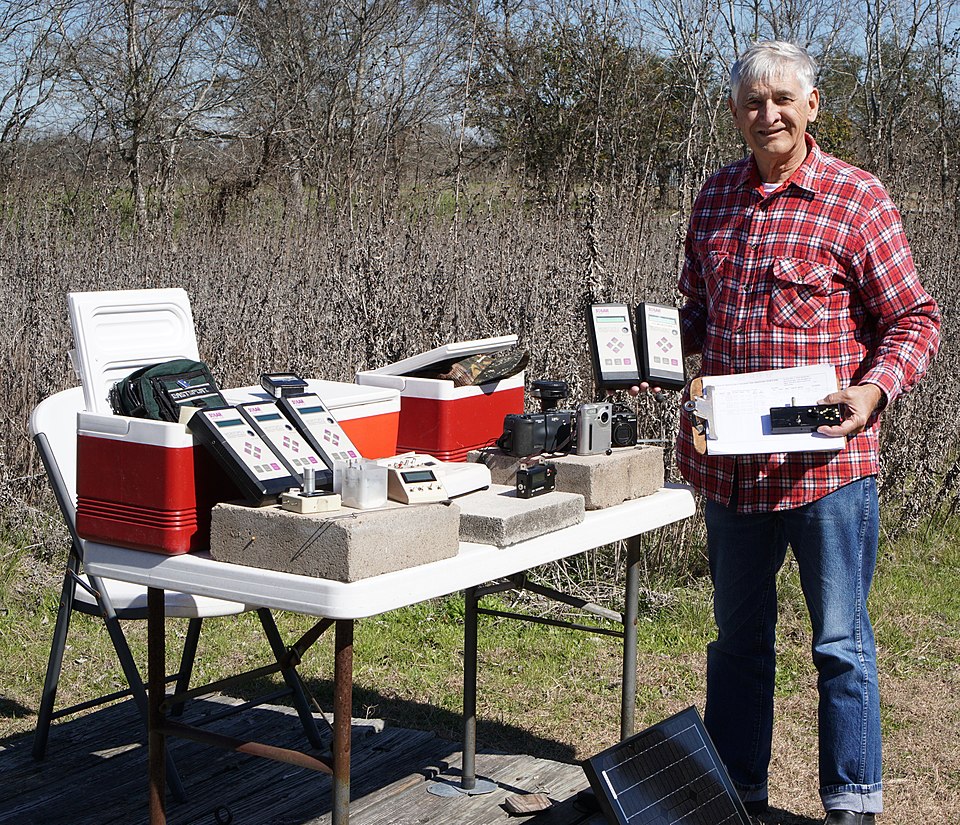
About Forrest M. Mims III
Forrest M. Mims III is a Texas A&M University graduate, amateur scientist, inventor, and one of the most widely read electronics authors in American history. His Radio Shack Engineer's Mini-Notebook series — featuring hand-lettered text and meticulously drawn circuit diagrams — sold over 7.5 million copies and introduced an entire generation to practical electronics.
Beyond the notebooks, Mims designed atmospheric science instruments used by NASA and has published in Nature, Science, and numerous other journals. He has conducted daily atmospheric measurements at his Geronimo Creek Observatory in Texas since 1990 — a continuous record spanning over three decades. Discover magazine named him one of the "50 Best Brains in Science" in 2008.


"Run, Forrest, Run!"
There's a reason that scene hits so hard. As an infant, I wore old-school foot braces — a pair of rigid shoes bolted to a metal bar that kept my legs aligned. I still get phantom sensations of not being able to move my legs independently, decades later. Dreams where I'm trying to run but something invisible holds my feet together.
Forrest Mims' notebooks were my version of Jenny yelling "Run!" His hand-drawn circuits didn't care about your background or your limitations. They just said: here's how a transistor works, here's how to build something real. That directness — no gatekeeping, no prerequisites, just knowledge laid bare on the page — made electronics feel like something I could actually do. Not just read about. Do.
Learning from Mims felt like the moment the braces broke off. Suddenly the thing that seemed impossibly complicated was just... circuits. Components. Connections you could trace with your finger. And once you built your first blinking LED or heard your first 555 timer squeal, there was no going back. You were running.
About This Collection
These notebooks were originally published by Radio Shack between 1985 and 1993. All materials have been preserved and made available through Archive.org's Folkscanomy project. Click any notebook to view it with our embedded PDF reader, or download it in various formats.